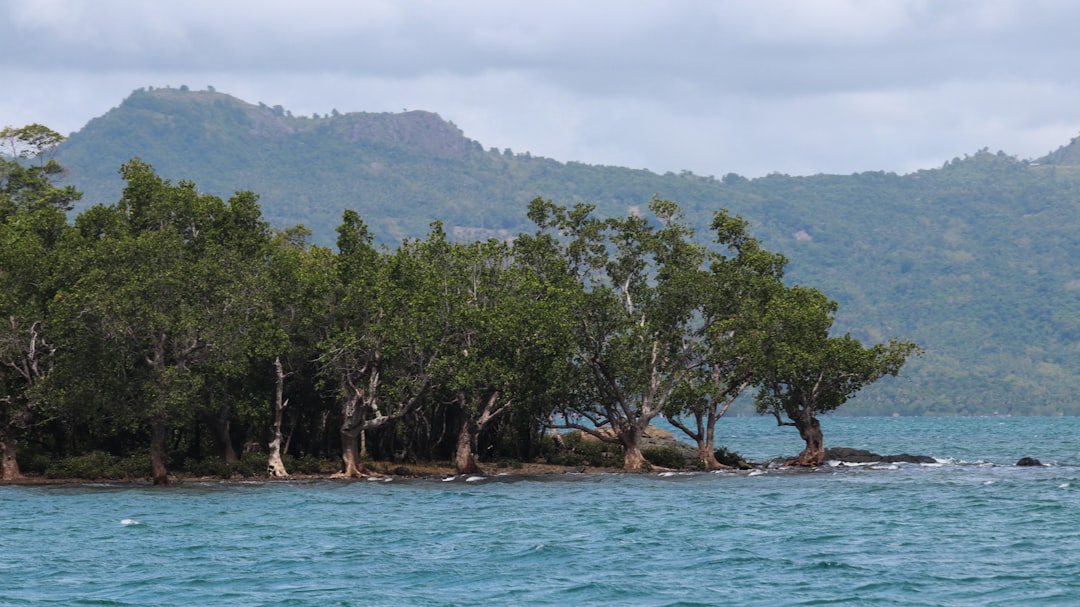
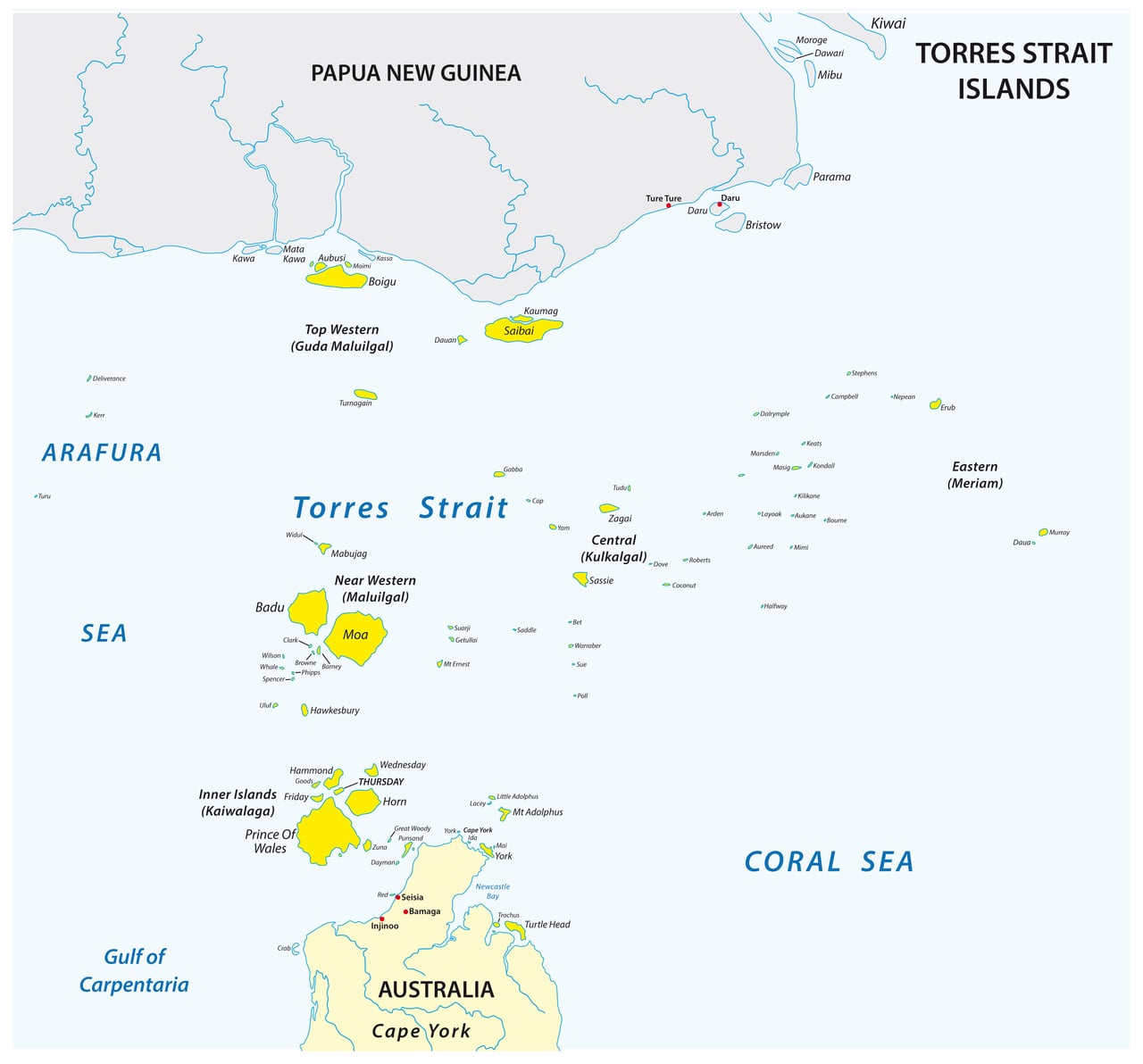
I cannot look away from the reality that climate change is reshaping lives and landscapes in the Torres Strait right now. The sea is swallowing coastlines, collapsing trees, and pulling away land that has held stories, homes, and ancestors for millennia. I feel called to respond, to use my skills and energy in service of communities who are on the frontlines of this crisis, but whose wisdom and resilience also point us towards solutions we all need.
The Torres Strait is not an abstract idea—it is a lived place of daily struggle and profound beauty. On some islands, three meters of land have been lost in a single year. Sacred sites where ceremonies were once held are now completely submerged. Elders—often called “our library” by younger Islanders—watch as the knowledge they hold risks losing its grounding in country itself. Children grow up seeing seawalls as their horizon. Families wonder if their islands, some only a meter above sea level, will still be inhabitable in their lifetime.
When Islanders describe seawalls as “band-aid solutions,” they are naming the uncomfortable truth: engineering fixes will not save these communities if we do not also address the root cause. Stopping the burning and export of fossil fuels is not optional—it is the only way to stop the tide. The Torres Strait people know this, because they live the consequences of inaction every day.
Yet even under immense pressure, Islanders continue to fight, create, and imagine a future. Storytelling, fashion, art, and ceremony have become tools of resistance and visibility. The fight for their islands is also a fight for their cultural identity. “We cannot practice our culture anywhere else,” one Islander said. It must be here, on these islands, in connection with these reefs, tides, and winds.
This conviction led a group known as the Torres Strait 8 to take their case to the United Nations. In 2022, the UN Human Rights Committee found that Australia had violated the rights of Torres Strait Islanders by failing to act on climate change. This was a landmark decision, affirming that climate inaction is a human rights violation. It also showed the world what Islanders have long said: this is not just about sea-level rise, it is about the right to culture, to home, to dignity.
For me, standing with the Torres Strait is about amplifying a struggle that embodies the deepest intersections of climate, culture, and justice. It is about recognizing that elders’ knowledge, passed down for generations, offers insights into resilience and adaptation that the world urgently needs. It is about understanding that these islands are sacred, and that their survival is a question of our collective humanity.
The Torres Strait is a frontline, yes—but it is also a beacon. It shows us what is at stake and what is possible when culture, courage, and community come together in the face of crisis.